Showing posts with label LIFE. Show all posts

Thursday, June 13, 2013

UNIVERSE - Un nuevo tipo de estrellas sorprende a los astrónomos - WORLD


Durante siete años un grupo de astrónomos centró su atención en estrellas de la constelación de Centauro, en los extremos de la Vía Láctea. Ahora descubrieron que para su sorpresa, estos soles lejanos tienen una forma de variar su brillo que no está considerado en las teorías a cerca del tema.


La paciente observación durante siete años de más de 3.000 estrellas de la constelación del Centauro, en el extremo norte de la Vía Láctea, proporcionó una buena sorpresa: 36 de ellas varían su brillo con un patrón totalmente inesperado.

De acuerdo a lo que publicó El País de Madrid, el hallazgo desafía las teorías estelares y los científicos no saben aún qué mecanismo produce ese cambio minúsculo de brillo (0,1% del brillo normal de la estrella) que han observado y que se produce en períodos que van de dos a 20 horas.

Se trata de estrellas más calientes y brillantes que el Sol, pero, aparentemente, no tienen nada de especial que las haga comportarse diferente de otras de sus pares.

"La  existencia de esta nueva clase de estrellas variables es un reto para los astrofísicos", señala Sophie Seasen, una de las científicas del equipo, del Observatorio de Ginebra al diario madrileño.

Los modelos teóricos actuales predicen que su luz no varía periódicamente, así que ahora los científicos se abocan a buscar más datos del comportamiento de este extraño nuevo tipo de estrellas.

Ya tienen alguna pista: algunas parece que giran a muchísima  velocidad, explicó el Observatorio Europeo Austral (ESO). Rotan a velocidades que superan la mitad de la que sería la velocidad crítica, es decir, el umbral a partir del cual la estrella es inestable y lanza su material al espacio. En esas condiciones, la rápida rotación tendrá un impacto importante en las propiedades internas del astro.

El hallazgo de estas peculiares estrellas fue posible gracias al trabajo continuado con un telescopio situado en el Observatorio de La Silla (Chile), del ESO.

Los investigadores del Observatorio de Ginebra presentaron su descubrimiento en la revista Astronomy and Astrophysics. "Hemos logrado este nivel de sensibilidad gracias a la gran calidad de las observaciones, combinado con un análisis muy cuidadoso de los datos", declara la líder de la investigación, Nami Mowlavi, en un comunicado del ESO. Los análisis de las imágenes continúan.


Sunday, June 9, 2013

NATURE / LIFE - Conmovedor pedido de ayuda de una mamá pato - WORLD


  El ave logró salvar la vida de sus crías, que estaban atrapadas dentro de una alcantarilla. Comenzó a graznar y llamó la atención de unos policías que pasaban por el lugar. Finalmente la madre y sus crías fueron llevadas a un río, donde recuperaron su libertad.


Wednesday, June 5, 2013

NATURE - Discovery of little monkey from 55 million years ago rewrites history of humans - UNITED KINGDOM


A fossilised skeleton of a tiny creature with a long tail, sharp teeth and monkey-like feet has turned out to be the oldest-known primate – the group that includes gorillas, chimps and humans.

Scientists discovered the fossil in the solidified sediment of an ancient lake bed in China and have dated it to about 55 million years ago, about 10 million years after the demise of the dinosaurs and seven million years before the date of the previous oldest-known primate.

The researchers said it is one of the most exciting fossil discoveries in recent years because the animal – called Archicebus achilles – is the closest-known relative of the common ancestor to the entire “anthropoid” lineage encompassing monkeys, apes and man.

Archicebus grew no bigger than a modern-day pygmy shrew and from its relatively small eye sockets scientists believe it was active during the day rather than at night, feeding off insects and small invertebrates.

“Archicebus differs radically from any other primate, living or fossil, known to science,” said Christopher Beard of the Carnegie Museum of Natural History in Pittsburgh, co-author of the fossil’s scientific description, published in the journal Nature. “It looks like a hybrid with the feet of a small monkey, the arms, legs and teeth of a very primitive primate and a primitive skull bearing surprisingly small eyes. It will force us to re-write how the anthropoid lineage evolved,” Dr Beard said.

Although Archicebus (which means “first, long-tailed monkey”) is close to the common ancestor of all anthropoids, scientists believe it was not a direct ancestor of humans but instead had begun to evolve along the alternative primate lineage that eventually gave rise to the tarsiers – a specialised group of small, nocturnal primates.

“This is not a direct ancestor of humans but for the first time it sheds light on this pivotal episode of primate evolution when two branches of primates – the anthropoids and the tarsiers – split apart,” Dr Beard said.

A farmer discovered the fossil in an ancient lakebed in China’s Hubei Province

Tuesday, March 5, 2013

ONLY GOOD NEWS, NOTHING ELSE, JUST ENJOY LIVING!

 
Have you ever realized that, besides 99% of the news on tv, radio, paper etc, shows not good news, like "war here" "conflict there" or "xx people died" and news like that, telling about death, war, sikness, hungry, conflicts and things related to that, again besides it, NOBODY,  neither the tv broadcasts, neither the writers not even the people that reads, listen, watch those  news, just pays attention to this but DOES NOT SHARE THE FEELING THAT THE PEOPLE AFFECTED IN THOSE NEWS FEELS.

So having this into consideration, if we dont share neither care about the people that is not having a good time in their lives, than why wath those news? does ir gives us something goo for our lives? NO!. Does it teaches something to us? NO! so lets just turn off the TV, radio and avoid reading / comment those news that are nothing but sickness to our hearth and spend some times reading some good news and feeding our  brain and most of all OUR SOUL  with time to worry about what we really want and what our hearth lead us to go!


THE GODD TIMES ARE COMMING! LETS SHARE OUR PLEACE, LOVE AND WELL BEING TOGETHER!


Monday, February 11, 2013

ENVIRONMENT / NATURE - 9,000-strong penguin colony discovered in Antarctica - WORLD


9,000-strong penguin colony discovered in Antarctica


9,000-strong penguin colony discovered in Antarctica
The massive emperor penguin colony had never ever encountered humans until researchers found them on Antarctica's Princess Ragnhild Coast.


WASHINGTON: A huge 9,000-strong colony of emperor penguins has been discovered in Antarctica after scientists spotted their poo trails in satellite images.

The massive emperor penguin colony had never ever encountered humans until researchers found them on Antarctica's Princess Ragnhild Coast.

Researchers from the British Antarctic Survey noticed the trail in 2009 while studying satellite images of Antarctica and it was not until December last year that three researchers from the International Polar Foundation found the colony.

Alain Hubert, founder of the International Polar Foundation, said the penguins were curious rather than scared of them, National Public Radio (NPR) reported.

"When you arrive, they just come to see you, to watch you, to turn around you. The penguins - and especially the emperors -- they are so human. They're so cute," Hubert said.

Since the penguins had never encountered humans, Hubert says they weren't scared, just curious.

Hubert and his team live at the research station during the Antarctic summer and are focused on studying climate change, not penguins.

After they encountered a number of emperor penguins, they were convinced that a colony must be close by. They decided to make the treacherous 48-Km trip east to the sea ice.

"First of all, you have to imagine you're in the middle of nowhere - without any visibility, with complete whiteout after 24 hours driving on the ice -- you go down to the sea," said Hubert.

After navigating their way to the sea, they searched for hours and found more penguins than they had ever imagined. Hubert says that seeing so many animals huddled together was like being on another planet.

"I spent more than five years of my life in the polar regions, but that was the kind of moment that I wouldn't have expect(ed) to be able to just enjoy. It's a privilege," Hubert said.

If there was enough penguin poop to see from space, it seems like there would be quite a stench on the ground. Hubert says it wasn't a problem.

"It's too cold, really, to smell it, you know? I spoke to some scientists and they told me if it was a bit warmer, it's really smelly, " Hubert said.  

HEALTHY LIFE - Foods for a good night’s sleep - INDIA


Foods for a good night’s sleep
Foods for a good night’s sleep (Thinkstock photos/Getty Images)


Insomnia or lack of sleep can have a terrible effect on your body besides a rough morning. We list out certain food that can help you get sound sleep. 


Bananas: Researchers have found that having a banana before going to bed can help people suffering from sleep apnea by keeping their throats open and therefore reduce the risk of choking. Bananas are also excellent source of magnesium and potassium, minerals that help prevent muscle spasms or cramps during the night, making them a good bedtime snack as well especially after a heavy exercise session.

Cherries: A natural source of melatonin, researchers in the Journal of Sleep and Sleep Disorders indicate that consuming cherries before bed helped people sleep faster and easier. The fruit is a natural sleep aid.

Flax seeds: These are ideal for increasing levels of sleep regulating serotonin in the body due to high levels of omega-3 fatty acids. Furthermore, omega-3 fatty acids have been proven to help reduce anxiety, depression and stress which are leading causes of insomnia.

Dairy products: Some research suggests that a deficiency of calcium in the diet can cause disturbed sleep patterns and a lack of deep sleep. Dairy products come to our rescue.

Oats: It is a good source of tryptophan. Try eating a small bowl of porridge before bed to help you get some deep sleep.

Wednesday, January 23, 2013

ENVIRONMENT II - God’s Own Forest - INDIA


God’s Own Forest
JYOTI SHETTY and NALA PONNAPPA experience the sacred forest of Kodagu and come back wiser
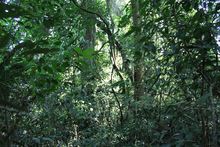
Walking along the edge of the Devara Kaadu, the sacred forest dedicated to goddess Bhagawati in Karada village, Kodagu, we were searching for a path to get into the forest. Tucked away in a corner and spread over nine acres, rarely has anyone entered the hallowed precincts of this sacred grove. Yet, we were there looking for a small clearing and were relieved to find one.
We walked slowly over a thick carpet of dead leaves, tapping our walking sticks intermittently for any wayward snake or insect. Then we came to a grinding halt. The clearing did not go deep enough; we had to take another path to move ahead.
All along, the intertwining vines formed a curtain, snaking high up. To part these or even break a twig is considered sacrilegious. No wonder, as no paths were cut through the jungle, vines grew all over just like cobwebs.
Ancient groves like these are deeply revered by the local communities. The groves, which are hubs of biodiversity, are found largely in Karnataka’s Kodagu, or Coorg region. For the nature-loving Kodava community, Devara Kaadu is a place of worship to appease its favourite deities. Over a hundred years ago, there were more than a 1,000 such sacred groves in the region. Now there are only 350 left.
We stopped by an old tree to catch our breath. We found the peace and quiet overpowering. We had entered into the realms of an authentic untouched forest, most revered by the Kodavas. Not even cows graze here. Were we trespassing? What if the gods get angry?
Forest Deities
With so many questions welling up in our minds, we moved on. There is not much of wildlife here. The tigers, wild dogs and flying squirrels are all long gone; wild boars can be sighted occasionally but then it’s the Kodavas’ favourite dish. Then what was it about the forest that looked so intimidating? Was it the myth and stories that floated around these dark, eerie forests working on our minds?
The screen of lush vegetation all around was very appeasing, but the crunching leaves below were not. We kept an eye out for any camouflaged insects and reptiles. Stepping on dead wood was equally dangerous; being hollow, they crumble when you step on them.
At last we reached a sunlight-drenched clearing from where a path led to the Bhagawati Temple; the sunlight lifted our spirits and reassured us.
The priest was not very welcoming though. His apprehension was understandable. He did not want too many inquisitive travellers disturbing the peace of the forest.
Most villages in Coorg have temples dedicated to deities such as Devi Bhadrakali, Aiyyappa, Shiva or Iguthappa. These places of worship double up as venues for numerous religious functions and celebrations, with the sacred groves forming an impressive backdrop, changing colours with the season. Sometimes new leaves on the huge trees look like red and yellow festoons, fluttering away in the gentle breeze as if celebrating deep forest secrets.
Villagers were allowed to take wood and any edible fruits only from the fringes; even today, the heart of the Devara Kaadu is untouched, unspoilt, and pristine.
Sacred groves are an integral part of the shrines to which they are attached. In every village, the sacred grove exists because of the temple.
The size of the sacred grove is not important; the world has a lot to learn from the tradition of forest conservation that every village in Kodagu upholds. Each grove has three common features: the deity, the temple forest and the sacred tank. Tree diversity is high in these groves. Whoever said conservation of forest began in the 21st century?
Myths To The Rescue
In and around our village, there are two prominent groves besides the one we entered — in Kadanga near the Arupatt Temple and a smaller grove near the Ishwara Temple in Chelavara.
The forests regenerate, thrive, and live entirely as nature deems fit. The weak trees rot and fall, making way for new growth, allowing sunlight to penetrate and provide succour from the dark covers of tall overgrowth and much-needed compost. Some of the deadwood is used to renovate the temples.
The core of the Devara Kaadu remains untouched, and even the temple priests don’t venture deep inside. During the Boluk Namme or Festival of Lights, an annual ceremony held in April, the entire village congregates; chicken is sacrificed at the edge of the forest to appease the resident gods.
However, over time, mankind multiplied faster than the forest growth and maintaining the eco system became a big challenge. To curtail land-grabbing, the priests came up with myths and legends. The locals believe that the gods hunt in these forests and some even say that the spirits of their ancestors rest in the woods.
If we can take a leaf out of the Devara Kaadu, there is so much to learn. We can peep into the original terrain and gain insight into what the landscape must have been in ancient times. Sadly, commercialisation, in the form of coffee plantations, hotels and homes has not spared even these revered forests.
To educate the future generation on the importance of forests and tell them about the symbiotic relationship that exists between the groves and mankind, this slice of Kodava culture has to be preserved and conserved. We have to venerate the gods and spirits of the forests, so that they protect us. After all, the tradition of tree worship has its roots in the vedas, where the ficus tree has been described as housing the fertility spirits of the mythical gandharvas and apsaras.
ponnappa48@gmail.com

GOOD! ENVIRONMENT - Dolphin population rises to 152 in Chilika lake in Orissa - INDIA


Dolphin population rises to 152 in Chilika lake in Orissa
As per estimation carried out in 2013 there had been an increase in population by 4.6 per cent compared to last year, he said adding the number of dolphins last year was 145.
Times of India


BHUBANESWAR: Good news for wildlife lovers from Chilika Lake. The population of Irrawaddy dolphins has increased by 4.6 per cent compared to last year's census.
"Irrawaddy dolphin population of Chilika lagoon is estimated to be 152 comprising 118 adults, 16 sub-adults and 18-calves & neonates," Ajit K Patnaik, the chief executive of Chilika Development Authority (CDA) said today.
As per estimation carried out in 2013 there had been an increase in population by 4.6 per cent compared to last year, he said adding the number of dolphins last year was 145.
The number of calves and neonates observed during the survey carried out recently is 18. A significant observation of 2013 population estimation was the sighting of dolphins in Northern sector. Eight dolphins were sighted from Northern sector, an indication of expansion of their habitat, he said.
Another significant observation is the increase in the number of calves and neonates, which is 38.9 per cent increase over the last year's figure.
Chilika, about 70 km from here, is the natural abode of highly endangered Irrawaddy dolphins ( Orcaella brevirostris). The present distribution range of this species is only in Asia - from Chilika to Indonesia within South East Asia and South Asia.
The total population of these animals in the world is estimated to be less than 7500 (highest 6400 reported from Bangladesh) and the population in Chilika is considered to be the highest single lagoonal population, Patnaik said.
A number of organizations, including state's forest department, were engaged in the population survey which was carried out following line Transect method.

Saturday, September 15, 2012

NATURE / GREEN - Ecuador's bold idea now as endangered as Eden's wildlife - AUSTRALIA


Jonathan Watts

A plan to preserve the most biodiverse region on earth from oil exploitation is foundering as enthusiasm cools.
 
textLungs of the world ... a child walks through deforested land in Yasuni National Park. Photo: Bloomberg
In their first hour in Yasuni's Amazonian forest, many people will see more creatures than they have in their lives, including some that have yet to be documented by science. To paddle up the Ayango creek, which leads from the traffic and pollution of the Napo River into the most biodiverse region on earth, is to encounter a wall of noise, bursts of colour and unimaginable combinations of life.

A tiger heron flaps lazily past our canoe, electric blue Morpho butterflies jolt the eye, spiders the size of a man's hand sit on branches and kingfishers flash past. On a mud bank, a lizard suns itself, while high up in the tree canopy, flying monkeys dart amid the grunting of hoatzin ''stinky turkeys''
 prehistoric survivors with claws that grow into wings that could have inspired the flying creatures of Avatar.

The thick vines, exotic plants, stunningly colourful birds and huge reptiles of the forests and water systems here far outstrip the wildest imaginings of any film director, but they are at risk from the worldwide trend of rising extinction rates and from local economic pressures to exploit underground oilfields.

textHome to a dizzying diversity of wildlife ... the squirrel monkey. Photo: Bloomberg
Yasuni, home to two of the world's remaining uncontacted tribes, has moved to the front line of a global battle between living systems and fossil fuels. Animal populations across the planet are 30 per cent smaller now than in 1970, according to the UN Environment Program. In tropical regions such as Ecuador the rate of decline is almost double that.

Just as the species must innovate to survive, Yasuni has inspired the planet's most creative and ambitious approach to biodiversity conservation, social development and climate change. Ecuador is the only country to have recognised the rights of nature in its constitution. After the discovery of a $7.2 billion oil reserve inside a pristine corner of the Yasuni National Park, the government has proposed leaving the fossil fuel in the ground if other countries will give them half that amount.

It has been hailed as an alternative to the ineffectual efforts of the United Nations to deal with climate change and biodiversity loss. The ITT Initiative, as the project is known, promises to the keep carbon in the ground in a 200,000-hectare corner of the park and, in the process, help to redistribute wealth from rich nations to the developing world and wildlife.

textNative to Ecuador ... Morpho butterflies. Photo: Melissa Fyfe
But, a little more than a year after it was launched, this bold project is as much at risk as the wildlife. Ecuador's President, Rafael Correa, said the results had been disappointing.

''This was a revolutionary idea. With a logic that I would call perfect: it implied a substantial change in the management of natural resources in the fight against climate change. It meant a transfer of resources from the richest countries - which are the biggest polluters - to poorer countries,'' he said.
 ''But what has happened since has been the opposite: because the US, UK and others can consume the assets generated by the Amazon jungle for free, they have committed absolutely nothing. The Yasuni ITT Initiative has raised a lot less than expected.''

With enthusiasm for the project cooling, oil companies are moving closer. A road is being built in a neighbouring oil exploration block inside the Yasuni park. Huge ecological wealth is at risk. One Yasuni hectare is home to a wider variety of trees, birds, reptiles and amphibians than in the US and Canada combined.

This ecological wealth is not just of interest to scientists, animal lovers and tourists. The UNEP estimates 40 per cent of the global economy is based on biological products and processes.
Biodiversity loss, it says, is becoming a greater concern for businesses than international terrorism. Pharmaceutical companies have based countless patents on results from the forest, where the chemical mix and match is immeasurably more dynamic than that of any science lab.

Recent research shows that biodiversity makes forests more resilient to drought. Other studies have shown they are less vulnerable to disease. This is crucial because the Amazon is also the world's greatest oxygen supplier and carbon sink, with more than half the world's above-ground carbon in its trees.

In international bodies, biodiversity loss was long treated as a poor cousin to climate change. But this is changing amid growing awareness that both are approaching dangerous tipping points as a result of human pressures. Earlier this year, a group of leading scientists warned that biodiversity loss could result in a ''global-scale state shift''.

''Much as the consensus statements by doctors led to public warnings that tobacco use is harmful to your health, this is a consensus statement by experts who agree that loss of earth's wild species will be harmful to the world's ecosystems and may harm society by reducing ecosystem services that are essential to human health and prosperity,'' said Professor Bradley Cardinale, an associate professor at the University of Michigan who led the study, published in Nature. ''We need to take biodiversity loss far more seriously - from individuals to international governing bodies - and take greater action to prevent further losses of species.''

But the trend is the opposite. World Wide Fund for Nature says it now takes 1.5 years for the earth to regenerate what we use in a year. The UN says almost one-fifth of vertebrate species are close to extinction, with amphibians most at risk. Each year, 52 vertebrate species move one category closer to extinction on the International Union for the Conservation of Nature ''red list'' of endangered species.

The ITT Initiative, which covers the Ishpingo, Tambococha and Tiputini oilfields that make up less than one-fifth of Yasuni National Park, reached its target of raising $100 million last year thanks to creative accounting and public support. Ivonne Baki, who is spearheading the fund-raising effort, says $200 million has now been raised, but more is needed. ''The cost of not doing something now will be far higher than the economic crisis. If we are serious about reducing emissions of carbon dioxide and doing something - which is all they talk about at international meetings - then this is the place giving oxygen to the world.''

Yet, there are many challenges. Money is not yet filtering through to local communities, where it is supposed to be used to improve social capital as well as protect biodiversity. There are concerns Correa may have lost some enthusiasm for the project.

''I want to meet the president because he has lost focus,'' said a village chief Giovanni Rivadeneira of the Kichwa indigenous group. ''We are concerned about education in our community. There was a promise from the president to work on that. He left a promise here and we are still waiting to hear about that.''

The governments of wealthy nations have given tepid backing. Some accuse Ecuador of environmental extortion. Most of the government-level ''donations'' so far are from Italy, which wrote off $51 million of its external debt as a contribution, and Germany, which is giving technical aid.
Much of the hesitation is due to concerns Ecuador may change its mind after accepting the money.

To offset this, Correa's government has worked with the UN to establish a trust fund for the initiative. It promises to return donations of more than $50,000 if the oil is exploited under a clause that says it can be used in the case of a national emergency. This is the plan B dreaded by conservationists.

Carlos Andres Vera, the director of a documentary about the Taromenane uncontacted tribe in the park, says 40 per cent of Yasuni is already being exploited by oil companies and the ITT area is being prepared for the same treatment. ''The oil companies have already carried out exploratory studies there. Local people say they are already building tracks so they can push ahead with plan B. They say they are trying to save Yasuni, but that's bullshit.''

To the alarm of many, PetroEcuador is pushing ahead with development of extraction on the edge of the ITT. Two recent visitors say a road is under construction on the edge of an area famous for jaguar sightings.

This follows a destructive pattern seen in other parts of the park and surrounding areas, where oil companies have drilled wells and - most destructively - built roads. This opens the way for migrants, loggers, farmers, hunters, invasive species and disease.

The risks are obvious flying into Coco, the gateway to Yasuni. Seventy years ago, the forest stretched hundreds of kilometres to the west, but all you can see are palm oil and other cash crops.

Freshwater ecosystems are deteriorating. A discarded oil drum bobbing in the Napo highlights the pollution from the oil barges and river traffic. Locals blame oil for the demise of balsa trees and water-skier insects from the banks of the trunk rivers.

''My father said there used to be a lot in the Napo River, but they have disappeared because of the gasoline from the oil companies and many boats,'' said Remi Grefa, a guide from the Kichwa indigenous group.

Conservationists still hope Ecuador and Yasuni can set a model for conservation. ''It is absolutely worth it,'' said the Indian ecological activist and philosopher Vandana Shiva.

''What is not worth it is the old way of fossil fuels as the central resources rather than living waters, living streams, living trees, living forests, living cultures. And a fossilised mindset that should have disappeared 100 years ago.''


Read more: http://www.smh.com.au/environment/animals/ecuadors-bold-idea-now-as-endangered-as-edens-wildlife-20120914-25xrf.html#ixzz26XNOFuCJ

Monday, September 10, 2012

ENTERTAINMENT - Feng shui simplified - UNITED ARAB EMIRATES


Debut book by feng shui consultant and former Dubai resident offers practical tips
Feng shui consultant Dr Jin Peh
  • Image Credit: Florence Pia G. Yu/Gulf News
  • Feng shui consultant Dr Jin Peh.

"I was able to write more in my villa in Umm Suqeim," feng shui consultant Dr Jin Peh says, holding his recently published book Feng Shui: A Hong Kong Perspective. It is a collection of some of the best feng shui advice he published for his column on the South China Morning Post.
“At least 80 per cent of this was written in Dubai," he says on his September visit to the emirate, where he has lived for seven years before moving to Hong Kong in 2010.
Writing the book while in Dubai wasn’t so hard, he says, since Dubai and Hong Kong have a lot in common, especially when it comes to apartment buildings.
The paperback contains more than 200 uncomplicated feng shui advice on a plethora of issues. Having relationship problems? Turn to page 43 and Dr Jin tells you the feng shui issues you may have at home. Looking to improve your finances? From page 126, he talks about the uses of symbols to stimulate wealth, although in his usual practical advice he tells you: "They are no substitutes for hard work and sound investments."
He is thinking of UAE distribution for the book, and publishing a second one. He is also considering moving back to Dubai. “Hong Kong opened doors for me to publish my first book, but life there is so hectic I don’t have space to be creative,” he says.
He leaves the city on Tuesday to carry out feng shui assessments in other parts of the world. He has been called for consultations in Kuwait, Bahrain, Malaysia, Singapore, Australia, the US, Canada, Switzerland and Germany.
In the UAE, the common feng shui issues he helped to fix were in apartments and villas. "Many live in apartments, where the floor layout may be affected by the lack of space. Major alterations to improve the energy flow can be disruptive physically and financially, so there is a need work on other ways to fix the problem. It's challenging but ultimately gratifying," he says. "Feng shui should improve the overall quality of your life, not create additional stress."

Fact Box
Feng Shui: A Hong Kong Perspective is available on amazon.co.uk for 14.41 pounds (Dh84.75). For updates, check www.jinpeh.com

Thursday, September 6, 2012

HEALTH - Want to live a long life? Then eat your calories - WORLD


A new study on monkeys did not bring the vindication calorie-restricted enthusiasts anticpated

FOR MORE than 20 years, the rhesus monkeys were kept semi-starved, lean and hungry. The males’ weights were so low they were the equivalent of a 6ft-tall man who tipped the scales at just 120-133 pounds. The hope was that if the monkeys lived longer, healthier lives by eating a lot less, then maybe people, their evolutionary cousins, would too.

Some scientists, anticipating such benefits, began severely restricting their own diets. The results of this major, long-awaited study, which began in 1987, are finally in. But it did not bring the vindication calorie-restriction enthusiasts had anticipated. It turns out the skinny monkeys did not live any longer than those kept at more normal weights. Some lab test results improved, but only in monkeys that were put on the diet when they were old. The causes of death – cancer, heart disease – were the same in both the underfed and the normally fed monkeys.

Lab test results showed lower levels of cholesterol and blood sugar in the male monkeys that started eating 30 per cent fewer calories in old age, but not in the females. Males and females who started dieting when they were old had lower levels of triglycerides, which are linked to heart disease risk.

Monkeys put on the diet when they were young or middle-aged did not get the same benefits, although they had less cancer. But the bottom line was that the monkeys that ate less did not live any longer than those that ate normally.

Rafael de Cabo, lead author of the diet study, published last week in the journal Nature, says he is surprised and disappointed that the underfed monkeys did not live longer. Like many other researchers on ageing, he had expected an outcome similar to that of a 2009 study from the University of Wisconsin that concluded that calorific restriction did extend monkeys’ lifespans.

But even that study had a question mark hanging over it. Its authors had disregarded about half of the deaths among the monkeys they studied, saying they were not related to ageing. If they had included all of the deaths, there was no extension of life span in the Wisconsin study, either.

“This shows the importance of replication in science,” says Steven Austad, interim director of the Barshop Institute for Longevity and Aging Studies at the University of Texas Health Science Center in San Antonio. Austad, who was not involved with either study, says the University of Wisconsin study “was not nearly as conclusive as it was made out to be” and that the new study casts further doubt on the belief that caloric restriction extends life.

But other researchers still think that it does, and one of the authors of the new study, Julie A Mattison, says there is still a bit of hope. The study is continuing until the youngest monkeys are 22 years old. While the data almost certainly rule out any notion that the low-calorie diet will increase average lifespans, there still is a chance that the study might find that the diet increases the animals’ maximum lifespan, she says.

Meanwhile, some others say that the Wisconsin study makes them reluctant to dismiss the idea that low-calorie diets result in longer life. “I wouldn’t discard the whole thing on the basis of one study when another study in the same species showed an increase in life span,” says Eric Ravussin, director of the nutritional obesity research centre at the Pennington Biomedical Research Center in Louisiana. “I would still bet on an extension of life.”

The idea that a low-calorie diet would extend life originated in the 1930s with a study of lab rats. But it was not until the 1980s that the theory took off. Scientists reported that in species ranging from yeast to flies to worms to mice, eating less meant living longer. And, in mice at least, a low-calorie diet also meant less cancer. It was not known whether the same thing would hold true in humans, and no one expected such a study would ever be done. It would take decades to get an answer, to say nothing of the expense and difficulty of getting people to be randomly assigned to starve themselves or not.

Researchers concluded the best way to test the hypothesis would be through the monkey studies at the University of Wisconsin and the National Institute on Aging, although the animals would have to be followed for decades. It was a major endeavour. The National Institute on Aging study involved 121 monkeys, 49 of which are still alive, housed at a facility in Poolesville, Maryland.

Those that got the low-calorie diet did not act famished, de Cabo says. They did not gobble their food, for example, but ate at the same speed as the control animals, even though their calories had been cut by 30 per cent.

As the studies were under way, some human enthusiasts decided to start eating a lot less, too. In those same years, though, studies in mice began indicating there might not be a predictable response to a low-calorie diet. Mice that came from the wild, instead of being born and raised in the lab, did not live longer on low-calorie diets. And in 2009, a study of 41 inbred strains of laboratory mice found that about a third had no response to the diets. Of those that responded, more strains had shorter life spans than had longer ones when they were given less food.

The response to that study was “absolute disbelief,” Austad says. “Even though the authors are well-respected calorie restrictors, people said the result was not interesting, that there was something weird about the mice.”

Now, with the new study, researchers are asking why the University of Wisconsin study found an effect on lifespan and the National Institute on Aging study did not.

There were several differences between the studies that some have pointed to as possible explanations.

The composition of the food given to the monkeys in the Wisconsin study was different from that in the ageing institute’s study.

The university’s control monkeys were allowed to eat as much as they wanted and were fatter than those in the ageing institute’s study, which were fed in amounts that were considered enough to maintain a healthy weight but were not unlimited.

The animals in the Wisconsin study were from India.

Those in the ageing institute’s study were from India and China, and so were more genetically diverse.

De Cabo, who says he is overweight, advises people that if they want to try a reduced-calorie diet, they should consult a doctor first. If they can handle such a diet, he says, he believes they would be healthier but, he says, he does not know if they would live longer.

Some scientists still have faith in the low-calorie diets. Richard Weindruch, a director of the Wisconsin study, says he is “a hopeless caloric-restriction romantic”, but adds that he was not very good at restricting his own calories. He says he might start trying harder. “I’m only 62,” he says. “It isn’t too late.”

Then there is Mark Mattson, chief of the laboratory of neurosciences at the National Institute on Aging, who was not part of the monkey study.

He believes there is merit to caloric restriction, but his routine is to do it intermittently, eating much less, but not every day. It can help the brain, he says, as well as make people healthier and probably make them live longer.

Mattson, who is 5ft 9in and weighs 130lbs (59kg), skips breakfast and lunch on weekdays and skips breakfast on weekends. “I get a little hungry,” he admits. “But we think being hungry is actually good.” – New York Times

Thursday, August 30, 2012

HEALTH AND LIFE - 'I look to the positives rather than the ifs or the buts' - IRELAND


MY HEALTH EXPERIENCE: I’ve often thought what it would be like to have two arms, says CATHAL MILLER

I WAS born without a right arm below my elbow. I can only speculate why, but my father, Charles Miller, who is originally from the Bronx, was an American soldier in Vietnam in 1965 and 1966 and he was exposed to Agent Orange.

There are numerous cases of the children of Vietnam veterans being born with disabilities.

One-armed people are not that common in Ireland, but the world is full of them. When I walked into the athletes’ village in Beijing in 2008 there must have been 1,000-1,500 arm amputees. I was in awe of that fact. I am part of an independent race of human beings.

I’m originally from Clontarf. I was very lucky growing up. I was in the sea scouts down on Bull Island. I discovered I had an ability to play rugby. For me to get to where I was on the team, I had to be fitter than everybody else. I would run five or six miles every evening and do extra weight sessions just to make up for my disability. I just adapted to it.

I was lucky in that I had good hand eye co-ordination. My ball-handling skills with one arm were quite good.

I played rugby in primary schools and then I went to school in St Paul’s in Raheny where I played in a Senior Cup semi-final at Lansdowne Road in 1986.

Simultaneously I played with Clontarf under-18s in rugby and got junior player of the year in 1989. I had a couple of run-outs with the senior team too.

I went from Clontarf to another club to play open side wing forward and I was quite good at that. I had a good arm and a half. I really enjoyed it.

I’m lucky that my mother is a qualified physiotherapist so from the age of three or four I was doing exercises. I started canoeing when I was eight or nine in the sea scouts and that developed me on both sides simultaneously.

I have got an artificial arm and I use a split hook. Some people have an artificial arm for aesthetic purposes, but in my opinion you are better off having something that works rather than something that looks good.

I would be in the school of “suck it up, who cares what other people think. So what if people stare. They’ll get over it.”

Using the hook, I can repair my bike, I can play with my children, I can carry the shopping and drive the car. For me, practicality is much more important than aesthetics.

I always cycled my bike and a friend of mine, Michael Delaney, who is another Paralympian, approached me and asked me if I would pedal a tandem with him for a National Council for the Blind of Ireland (NCBI) sports event in 2005.

We were third. One of the teams we beat had been at the Paralympics games in Athens the year before.

Between us we purchased a tandem and we ended up doing the Tour of Belgium on a tandem which would have been in May or June in 2006.

Between us we had three arms, four eyes and three and a half ears (Mick is partially deaf) and we came in the top 30 among the best tandem riders in the world. We were chuffed with that.

It became apparent that Mick was very good in the back, but my skills at the front were not quite as good. I was okay on the straight, but it was difficult to corner when I could use only one brake so Mick got a new partner.

I was approached by the Paralympics squad and asked would I race a solo bike so I agreed.

I did the European Championships in 2006. It was not an auspicious start, but I joined a cycling club called Obelisk and I met three guys, Mark McCabe, Ger Madden and Robert Kehoe, who started training me and in 2007 I went to the Paracycling World Championships in Switzerland. I got three top 10 finishes.

I represented Ireland in the Paralympics in Beijing in 2008. The whole experience was fantastic although I had bad luck in the road race.

I was fifth in the pursuit and missed the ride-off for medals by three or four seconds. I was ninth in the time trial, seventh in the kilo (one kilometre race) and crashed out of the road race.

I was asked by my coach if I would do it again and I immediately said yes.

It was an incredible experience.

In 2010 I got the medal ride-off in pursuit of the World Championship.

In the last two world championships I’ve missed the ride-off by a second. It is about time I had a little bit of luck.

The entire Paralympian squad voted for who would carry the flag and luckily they chose me.

I’m under pressure because I’m carrying the flag for the Irish team. How am I going to emulate Katie Taylor? Somebody said to me that I can’t let a girl beat me.

I am married to Anne and I have a seven year old, Aaron, and a 12 year old, Saoirse. They are going to see me in the velodrome on September 1st and 2nd and they might see why I couldn’t take them swimming or cycling on a Saturday morning for the last while.

I’m looking forward to London and I’m looking forward to having my family there.

I’ve often thought what it would be like to have two arms. Sometimes it gets frustrating. There were times in rugby when there was a try scoring pass on that I dropped the ball and I would say, “if I had two arms I would have scored it”, but I am what I am.

I work for the Revenue Commissioners and have received fantastic support from my work colleagues. I’m very lucky. I’ve had a very lucky life. I have great family, great support and great friends. From that perspective I look to the positives.

Lots of people have wished me well. I look to the positives rather than the ifs or the buts.

I think we are going to do better than in Beijing when we won five medals. We have competitors like Jason Smyth, the double Paralympics champion, Mike McKillip, Catherine Walsh and James Scully who are all fantastic athletes and who train very hard.

A lot of people look at the Paralympics and say, “aren’t they fantastic for what they can do” and rightly so, but people do not appreciate that there are a lot of things they can’t do, but they compensate for them in other ways. In doing so, it makes them even more superhuman.


The Paralympics Opening Ceremony is tomorrow night.